Additional information
| ISBN | 979-8-89966-958-3 |
|---|---|
| Author | Firew Gebremariam Woldgiorgis |
| Publisher | |
| Publication year | |
| Language | |
| Number of pages | 46 |

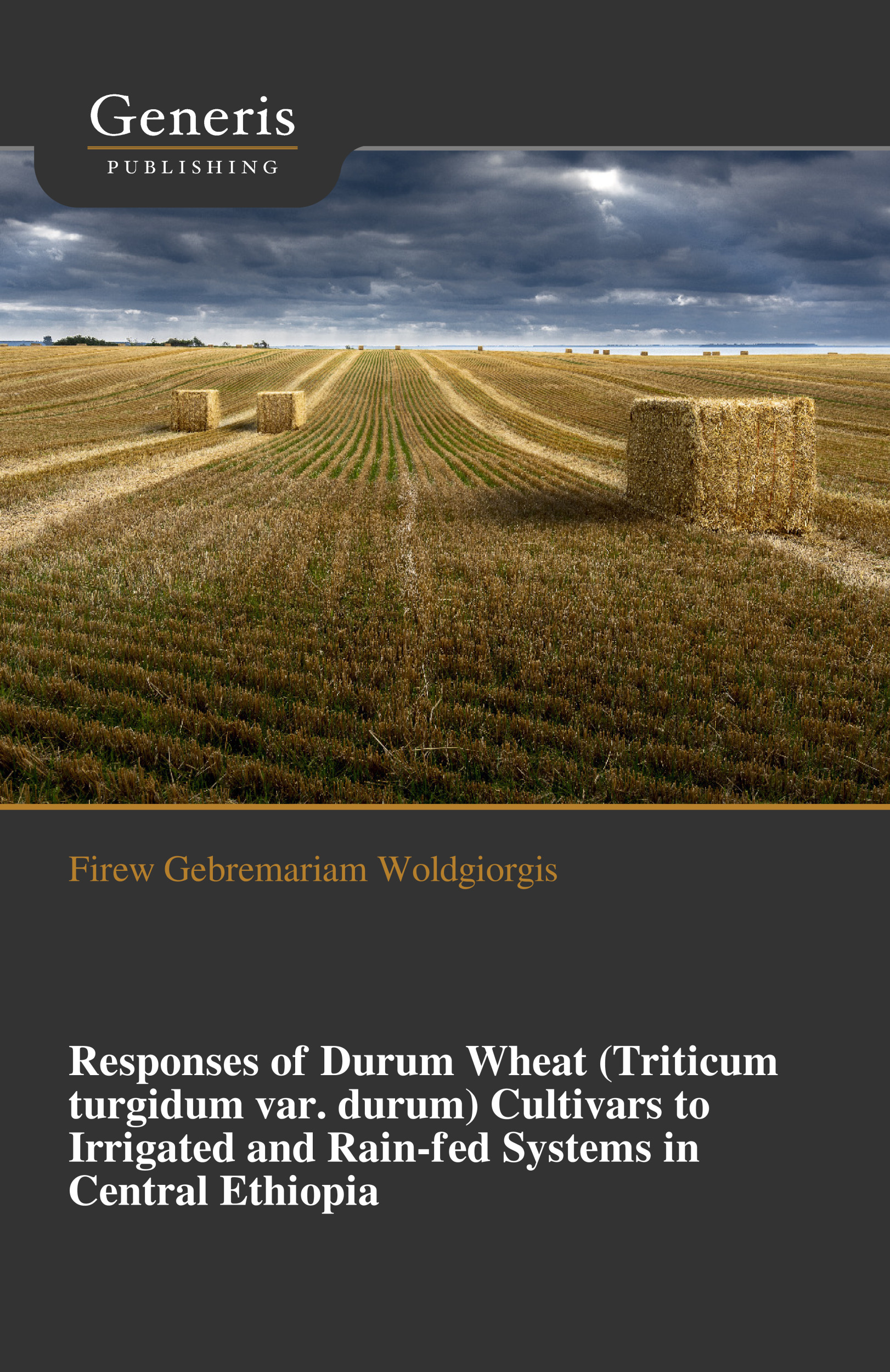
The book investigates the comparative advantages of irrigated versus rain-fed wheat production in Ethiopia, focusing on durum wheat cultivars. Conducted over two years (2020-2021), the study evaluated twenty durum wheat varieties under both irrigation and rain-fed conditions using a randomized complete block design with three replications. The findings revealed that irrigated conditions significantly enhanced various […]
ISBN: 979-8-89966-958-3
€25.99
| ISBN | 979-8-89966-958-3 |
|---|---|
| Author | Firew Gebremariam Woldgiorgis |
| Publisher | |
| Publication year | |
| Language | |
| Number of pages | 46 |
The book investigates the comparative advantages of irrigated versus rain-fed wheat production in Ethiopia, focusing on durum wheat cultivars. Conducted over two years (2020-2021), the study evaluated twenty durum wheat varieties under both irrigation and rain-fed conditions using a randomized complete block design with three replications. The findings revealed that irrigated conditions significantly enhanced various growth parameters and yields compared to rain-fed systems. Notably, cultivars Mangudo, Tesfaye, Utuba, Tate, and Hitosa demonstrated high grain yields, while Bakalcha, Toltu, Bullalla, Fetan, and Utuba exhibited elevated grain protein content. The cultivar Utuba excelled in both yield and protein across both production systems. Pair-wise T-tests confirmed that irrigation improved critical metrics such as plant height, tillers, and grain yield, underscoring the superiority of irrigated systems. The results suggest that selected cultivars could enhance durum wheat production in Ethiopia, potentially benefiting regions with similar climates and farming practices.