Additional information
| Weight | 0.07 kg |
|---|---|
| Author | Kumuyi Daniel, Ebenezer Olutope Akinnawo, Aderonke Akintola, Bede Chinonye Akpunne, Onisile Deborah Foluke |
| ISBN | 978-1-63902-444-5 |
| Language | |
| Number of pages | 37 |
| Publisher | |
| Publication year |

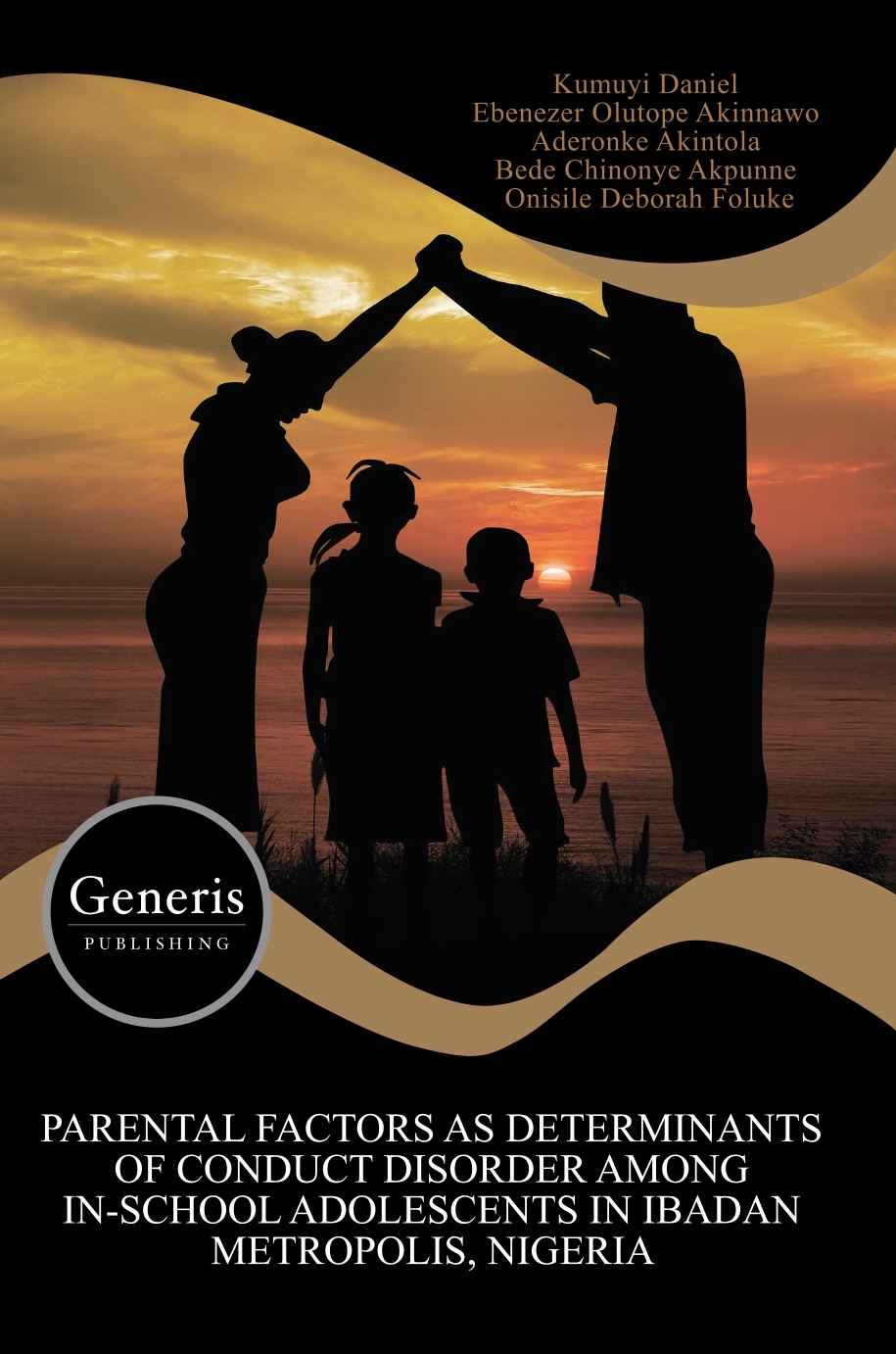
This study was carried out to observe the link between parental factors and Conduct Disorder (CD) among Nigerian school adolescents. A cross-sectional survey research design was adopted for the study where multi-stage sampling techniques led to selecting 1006 participants (mean age =15.4 years) from six secondary schools in Ibadan, Oyo State, Southwestern Nigeria. Participants responded […]
ISBN: 978-1-63902-444-5
€23.99
| Weight | 0.07 kg |
|---|---|
| Author | Kumuyi Daniel, Ebenezer Olutope Akinnawo, Aderonke Akintola, Bede Chinonye Akpunne, Onisile Deborah Foluke |
| ISBN | 978-1-63902-444-5 |
| Language | |
| Number of pages | 37 |
| Publisher | |
| Publication year |
This study was carried out to observe the link between parental factors and Conduct Disorder (CD) among Nigerian school adolescents. A cross-sectional survey research design was adopted for the study where multi-stage sampling techniques led to selecting 1006 participants (mean age =15.4 years) from six secondary schools in Ibadan, Oyo State, Southwestern Nigeria. Participants responded to Socioeconomic Status (SES) scale, The Parenting Styles Scale (PSS) and Frequency of Delinquent Behaviour Scaling Instrument (FDBSI). A high prevalence of CD was observed. We also observed that parenting styles significantly influenced conduct disorders. Responsive parenting was not a significantly predict CD, while control parenting significantly predicted CD. Parental occupation significantly influenced CD, with formal occupation types having higher mean scores for both fathers and mothers. Finally, there was a significant influence of socioeconomic status on conduct disorder among the participants. Findings concluded that there is a high prevalence of conduct disorder. Authoritarian and uninvolved parents with formal occupation and families with higher socioeconomic status were conduct disorder determinants among adolescents.