Additional information
| ISBN | 979-8-89966-552-3 |
|---|---|
| Author | Ernest Ampomah Arkoh, Francis Agbalenyo |
| Publisher | |
| Publication year | |
| Language | |
| Number of pages | 149 |

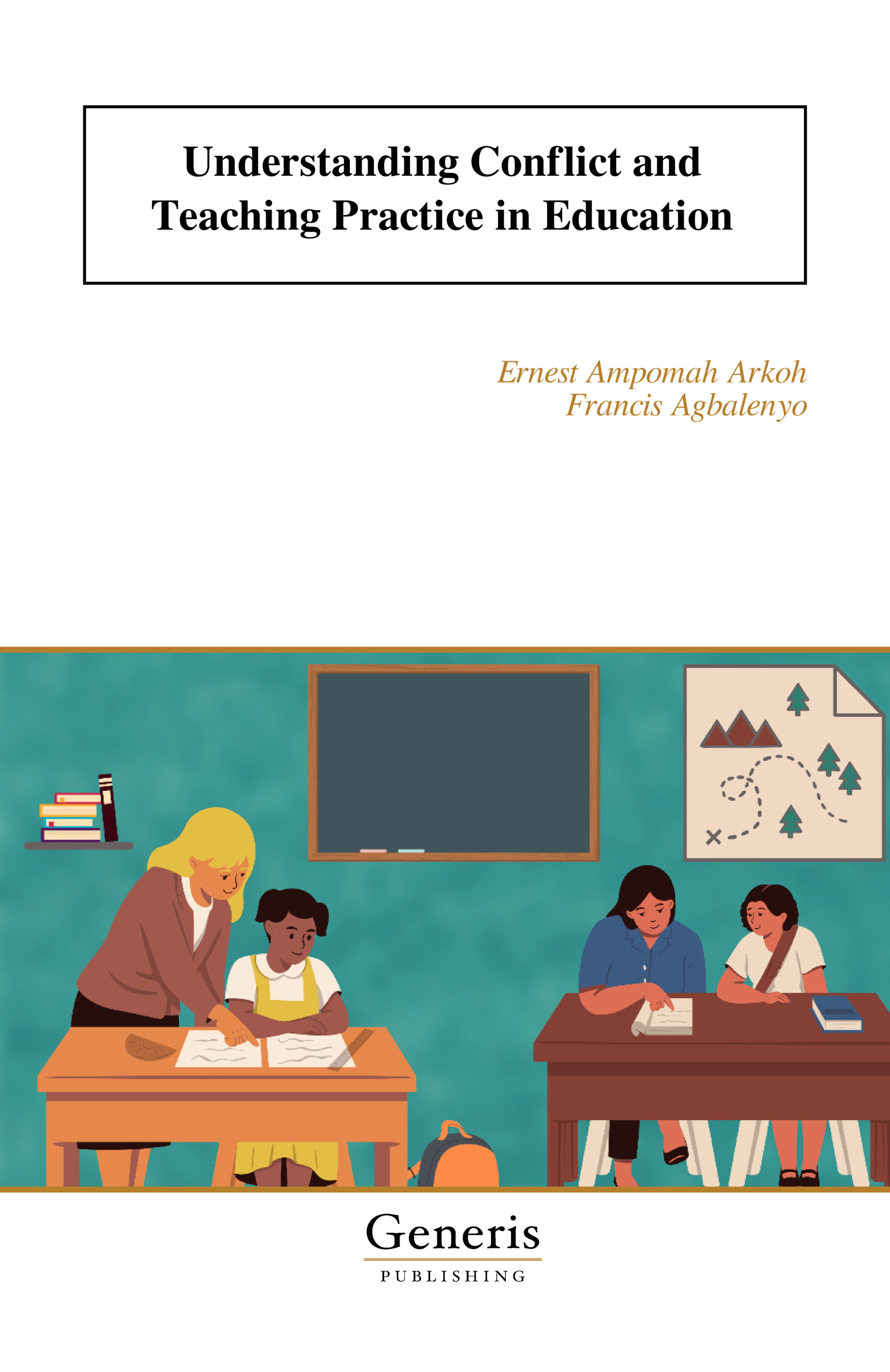
This book explores how conflict is an inevitable and meaningful part of educational settings rather than simply a problem to eliminate. It examines the different forms conflict can take between students, teachers, institutions, and wider social structures—and shows how these tensions are shaped by power, identity, culture, and policy. The authors argue that teachers should […]
ISBN: 979-8-89966-552-3
€35.99
| ISBN | 979-8-89966-552-3 |
|---|---|
| Author | Ernest Ampomah Arkoh, Francis Agbalenyo |
| Publisher | |
| Publication year | |
| Language | |
| Number of pages | 149 |
This book explores how conflict is an inevitable and meaningful part of educational settings rather than simply a problem to eliminate. It examines the different forms conflict can take between students, teachers, institutions, and wider social structures—and shows how these tensions are shaped by power, identity, culture, and policy. The authors argue that teachers should develop critical awareness and practical strategies to engage with conflict constructively.
By linking theory with classroom practice, the book emphasizes reflective teaching, dialogue, and inclusive approaches that recognize diverse perspectives. It highlights how unresolved conflict can hinder learning, while thoughtfully addressed conflict can deepen understanding, promote social justice, and strengthen relationships.
Ultimately, the text encourages educators to move beyond avoidance or control, positioning conflict as a tool for growth, critical thinking, and transformative learning within education systems.