Additional information
| ISBN | 979-8-89966-659-9 |
|---|---|
| Author | Dr. Eng. Guillaume NKO'O EBIO, Eng. Ngobtchok BENGUENE, Prof. Dr. Eng. Henriette ZANGUE ADJIA |
| Publisher | |
| Publication year | |
| Language | |
| Number of pages | 105 |

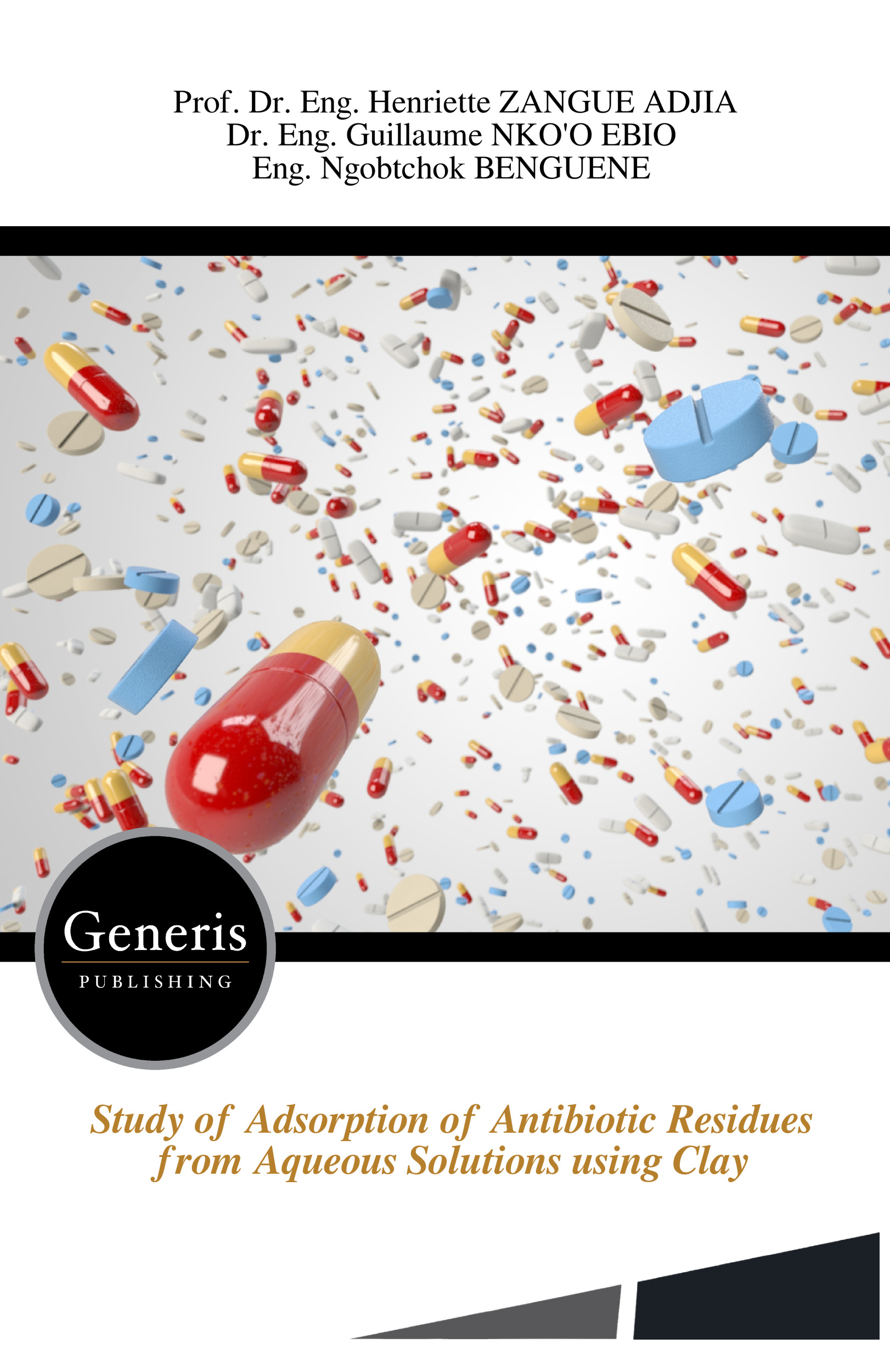
Pharmaceutical compounds are essential for preserving human and animal well-being, as well as for preventing disease. However, the high consumption of drugs, followed by improper disposal and inefficient treatment of wastewater can increase their environmental risk. In the case of antibiotics, more specifically amoxicillin, some of the consequences already known such as bacterial resistance and […]
ISBN: 979-8-89966-659-9
€37.99
| ISBN | 979-8-89966-659-9 |
|---|---|
| Author | Dr. Eng. Guillaume NKO'O EBIO, Eng. Ngobtchok BENGUENE, Prof. Dr. Eng. Henriette ZANGUE ADJIA |
| Publisher | |
| Publication year | |
| Language | |
| Number of pages | 105 |
Pharmaceutical compounds are essential for preserving human and animal well-being, as well as for preventing disease. However, the high consumption of drugs, followed by improper disposal and inefficient treatment of wastewater can increase their environmental risk. In the case of antibiotics, more specifically amoxicillin, some of the consequences already known such as bacterial resistance and certain interactions with aquatic organisms. The objective of this study is to study the adsorption of amoxicillin present in an aqueous solution by a local clay (montmorillonite) from the Far North Cameroon which is an available and abundant natural material. The experimental parameters such as, the contact time, the mass of the clay, the pH of the solution, the initial concentration of amoxicillin as well as the temperature were evaluated from a screening experimental design. A face-centered composite design optimized the absorption of amoxicillin. Pseudo-first order, pseudo-second order, and intraparticle diffusion models were fitted to the experimental data to determine the kinetics of the process.