Additional information
| ISBN | 979-8-89966-918-7 |
|---|---|
| Author | Bhupendra Sachan, Sampurnanand Tiwari |
| Publisher | |
| Publication year | |
| Language | |
| Number of pages | 108 |

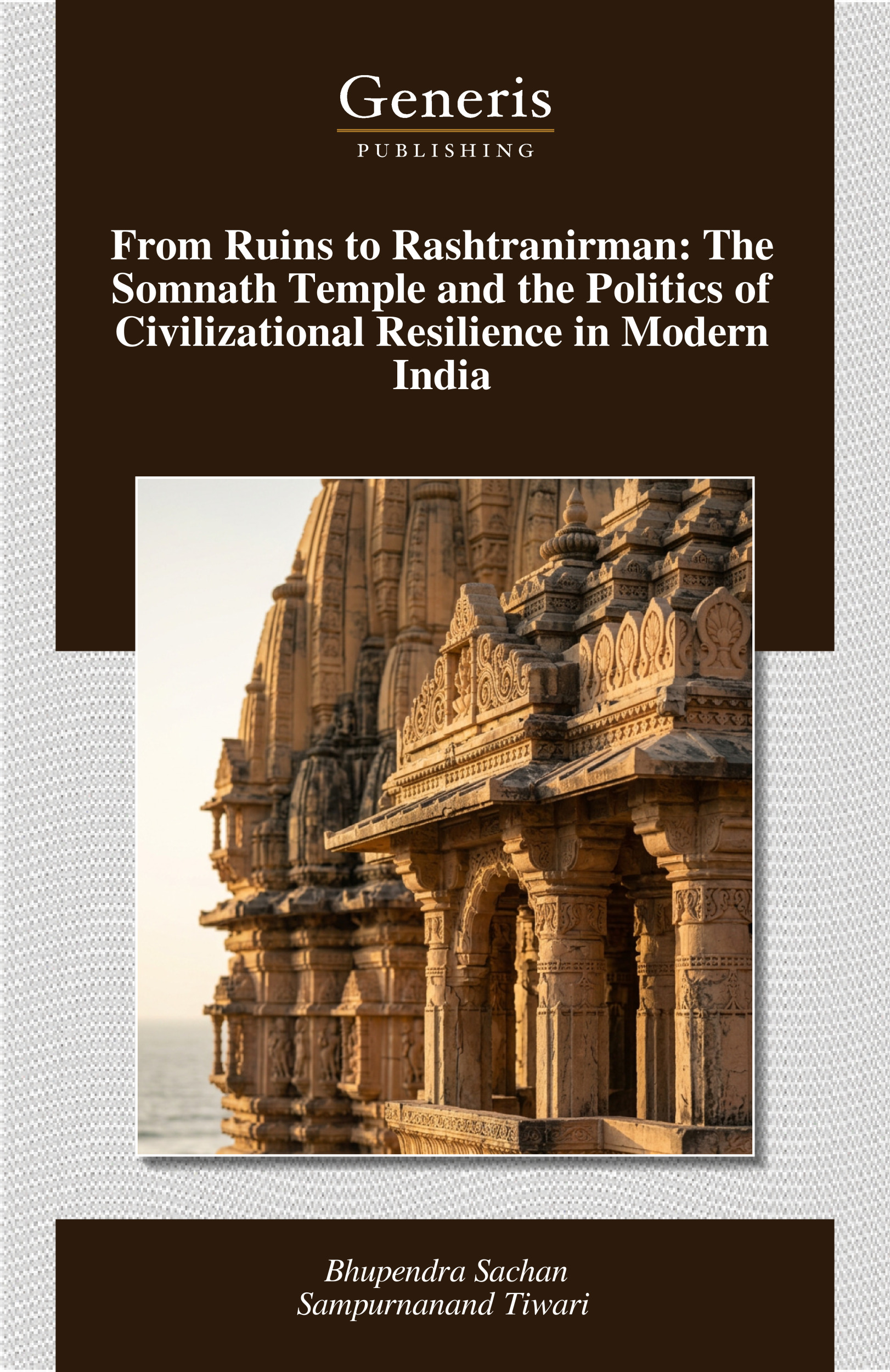
The Somnath Temple, regarded as the first Jyotirlinga, holds a distinct place in India’s holy landscape, historical consciousness, and political debate. Located near Prabhas Patan, Gujarat, it has historically served as an important pilgrimage and maritime commerce center. Over the years, Somnath became associated with recurring destruction and reconstruction tales, most notably Mahmud of Ghazni’s […]
ISBN: 979-8-89966-918-7
€35.99
| ISBN | 979-8-89966-918-7 |
|---|---|
| Author | Bhupendra Sachan, Sampurnanand Tiwari |
| Publisher | |
| Publication year | |
| Language | |
| Number of pages | 108 |
The Somnath Temple, regarded as the first Jyotirlinga, holds a distinct place in India’s holy landscape, historical consciousness, and political debate. Located near Prabhas Patan, Gujarat, it has historically served as an important pilgrimage and maritime commerce center. Over the years, Somnath became associated with recurring destruction and reconstruction tales, most notably Mahmud of Ghazni’s attack in 1026 CE and Sardar Vallabhbhai Patel’s post-independence rebuilding endeavor in 1947.
These narratives elevated the place from a provincial shrine to a powerful national symbol of civilizational survival, communal memory, and cultural renewal. The post-1947 rebuilding produced heated disputes among leaders such as Patel, K. M. Munshi, and Jawaharlal Nehru about state secularism, postcolonial identity, and the link between public power and religious history. In the late twentieth century, the temple became increasingly involved in political mobilization around cultural nationalism. Today, Somnath is still a multilayered location where faith, historical memory, secularism, and democratic diversity meet.


