Additional information
| ISBN | 979-8-89966-619-3 |
|---|---|
| Author | Ida María Ayala Rodríguez, Iraida Thalia Almaral Cereijo |
| Publisher | |
| Publication year | |
| Language | |
| Number of pages | 40 |

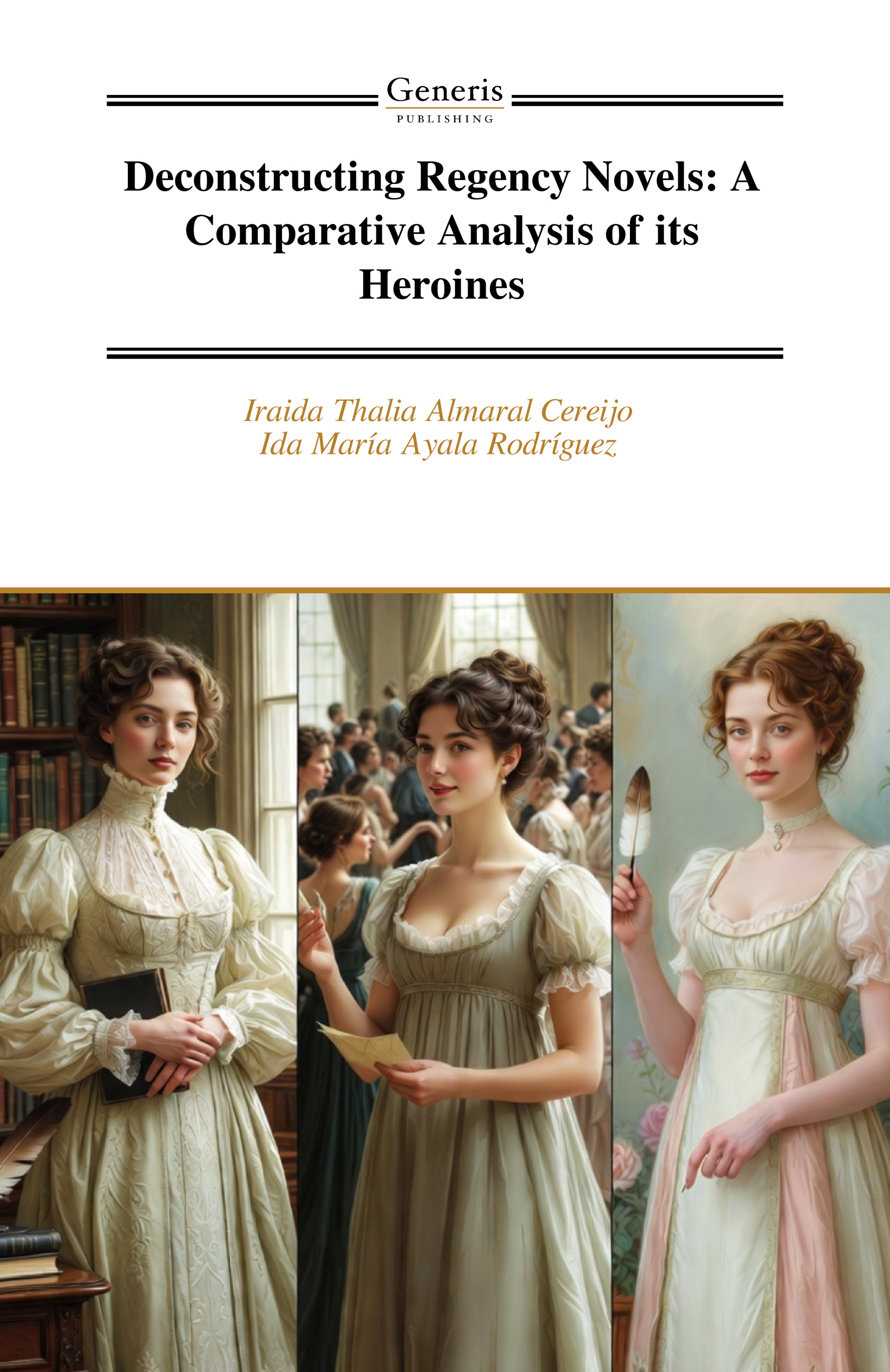
Jane Austen’s critique of women’s reliance on marriage, shaped by her era’s social constraints, became a cornerstone of the Regency romance genre. Her vivid depictions of English upper-class life established a lasting literary legacy. This evolution is evident in later works: Georgette Heyer’s 20th-century The Grand Sophy offers a deconstruction of Austen’s Emma, while Julia […]
ISBN: 979-8-89966-619-3
€23.99
| ISBN | 979-8-89966-619-3 |
|---|---|
| Author | Ida María Ayala Rodríguez, Iraida Thalia Almaral Cereijo |
| Publisher | |
| Publication year | |
| Language | |
| Number of pages | 40 |
Jane Austen’s critique of women’s reliance on marriage, shaped by her era’s social constraints, became a cornerstone of the Regency romance genre. Her vivid depictions of English upper-class life established a lasting literary legacy. This evolution is evident in later works: Georgette Heyer’s 20th-century The Grand Sophy offers a deconstruction of Austen’s Emma, while Julia Quinn’s 21st-century The Duke and I (from the Bridgerton series) revitalized the genre. Applying Derrida’s theory, a text’s meaning shifts with context and reader ideology. A comparative, deconstructionist analysis of the heroines—Emma, Sophy, and Daphne—reveals a clear evolution. Though their authors employ distinct styles and belong to different centuries, they all imbue their characters with feminist qualities. While these heroines share similar aims of navigating their world, each represents a progressive step in the depiction of female agency within the Regency romance framework.


