Additional information
| ISBN | 979-8-89966-932-3 |
|---|---|
| Author | Micheal Abimbola Oladosu |
| Publisher | |
| Publication year | |
| Language | |
| Number of pages | 119 |

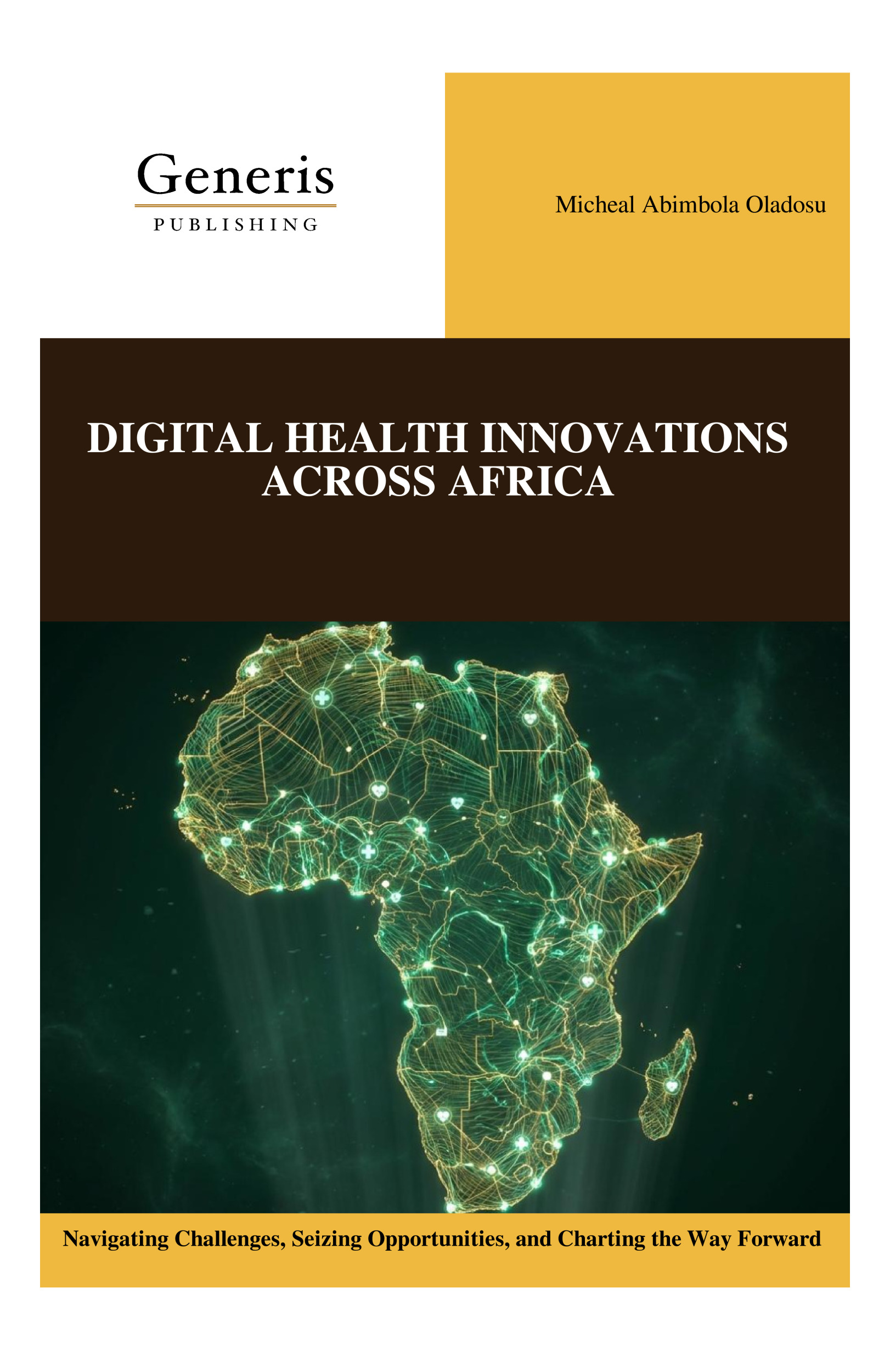
Digital Health Innovations Across Africa (1st ed., 2026; Oladosu et al.) is a 14-chapter, six-part book built on a PRISMA 2020 systematic review of 68 peer-reviewed studies from 32 African countries (2014–2025). It examines four technology areas: mHealth (45% of studies), telemedicine (28%), electronic health records (18%) and artificial intelligence (9%). mHealth, especially SMS reminders […]
ISBN: 979-8-89966-932-3
€37.99
| ISBN | 979-8-89966-932-3 |
|---|---|
| Author | Micheal Abimbola Oladosu |
| Publisher | |
| Publication year | |
| Language | |
| Number of pages | 119 |
Digital Health Innovations Across Africa (1st ed., 2026; Oladosu et al.) is a 14-chapter, six-part book built on a PRISMA 2020 systematic review of 68 peer-reviewed studies from 32 African countries (2014–2025). It examines four technology areas: mHealth (45% of studies), telemedicine (28%), electronic health records (18%) and artificial intelligence (9%). mHealth, especially SMS reminders and apps, improved medication adherence by 15–40%, appointment attendance by 20–35%, and maternal health outcomes. Telemedicine widened rural access to specialists, mostly open-source EHRs improved data quality and clinical decisions, and AI shows early promise in diagnosis, prediction and surveillance. The main barriers are infrastructure (78%), digital literacy (65%), cost (59%), weak regulation (44%) and poor interoperability (38%). Success hinges on multi-stakeholder engagement (82%), context-appropriate technology (76%) and integration with existing health systems (71%). Later chapters cover adoption theory, regional differences, COVID-19’s catalytic role, blockchain and large language models, policy and governance, and pathways to universal health coverage.