Additional information
| ISBN | 979-8-89966-662-9 |
|---|---|
| Author | Carlos F. De Angelis |
| Publisher | |
| Publication year | |
| Language | |
| Number of pages | 127 |

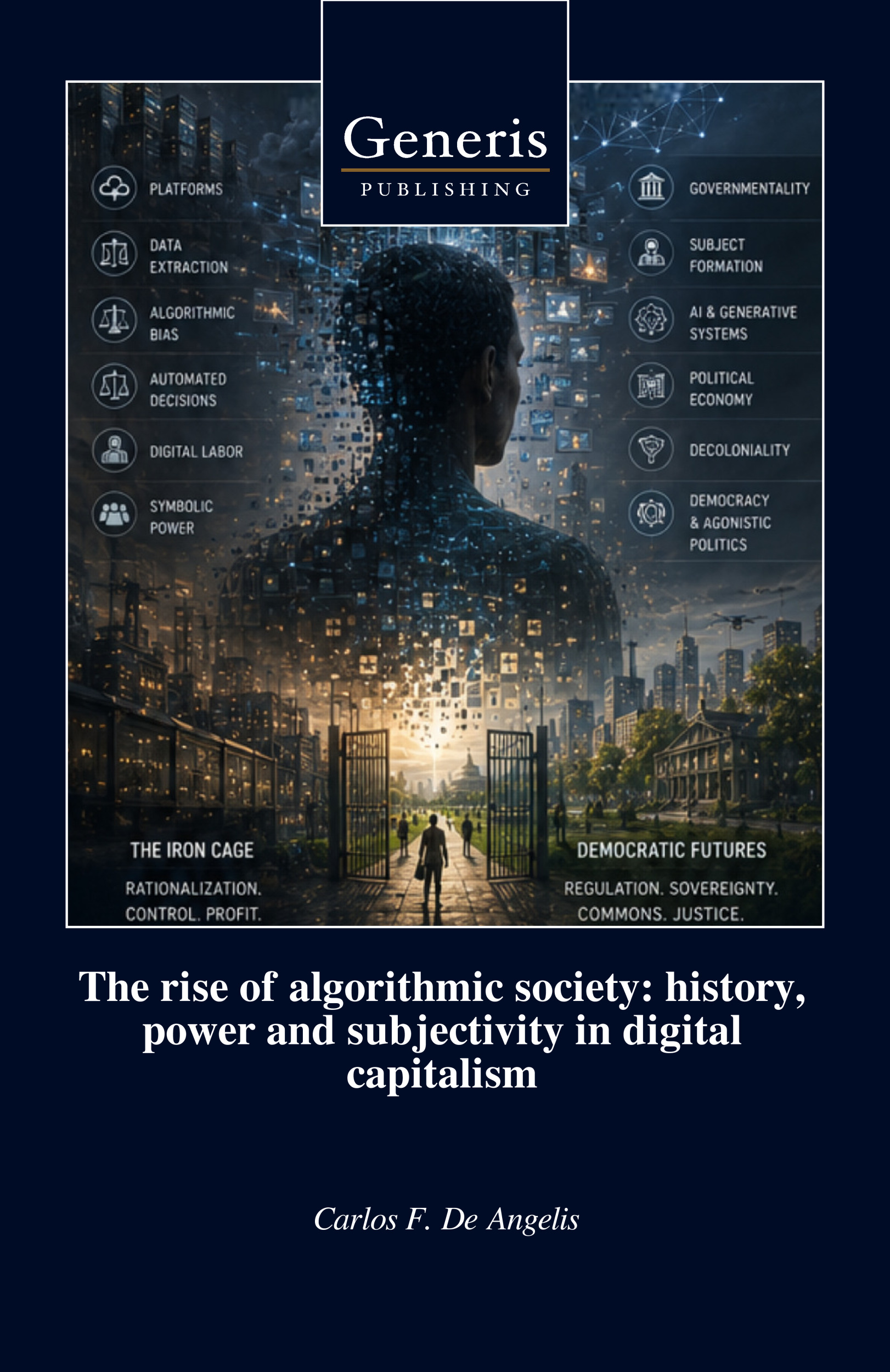
This book traces a genealogy of the algorithm from al-Khwarizmi to contemporary generative artificial intelligence, treating computation as an instrument of power rather than a neutral procedure. Six chapters move from historical reconstruction toward normative critique. Early chapters examine recommendation systems, big data infrastructures, and algorithmic bias as mechanisms of cultural governance and subjectivation. A […]
ISBN: 979-8-89966-662-9
€35.99
| ISBN | 979-8-89966-662-9 |
|---|---|
| Author | Carlos F. De Angelis |
| Publisher | |
| Publication year | |
| Language | |
| Number of pages | 127 |
This book traces a genealogy of the algorithm from al-Khwarizmi to contemporary generative artificial intelligence, treating computation as an instrument of power rather than a neutral procedure. Six chapters move from historical reconstruction toward normative critique. Early chapters examine recommendation systems, big data infrastructures, and algorithmic bias as mechanisms of cultural governance and subjectivation. A central section reactivates Max Weber’s iron cage to analyze bureaucratic rationality in automated decisions, then turns to resistance, litigation, and regulatory frameworks such as the European AI Regulation. A subsequent section draws on the notions of apparatus, governmentality, field, and habitus to read platforms as sites of symbolic domination, complemented by platform studies methodology. Closing chapters situate algorithmic capitalism within political economy, decoloniality, and democratic theory, proposing an agonistic politics of technology. The conclusion questions the goal directed design paradigm and outlines scenarios for democratic regulation, digital sovereignty, and common goods beyond the rationalized cage.