Additional information
| ISBN | 979-8-89966-614-8 |
|---|---|
| Author | Joseph Momoh Conteh |
| Publisher | |
| Publication year | |
| Language | |
| Number of pages | 205 |

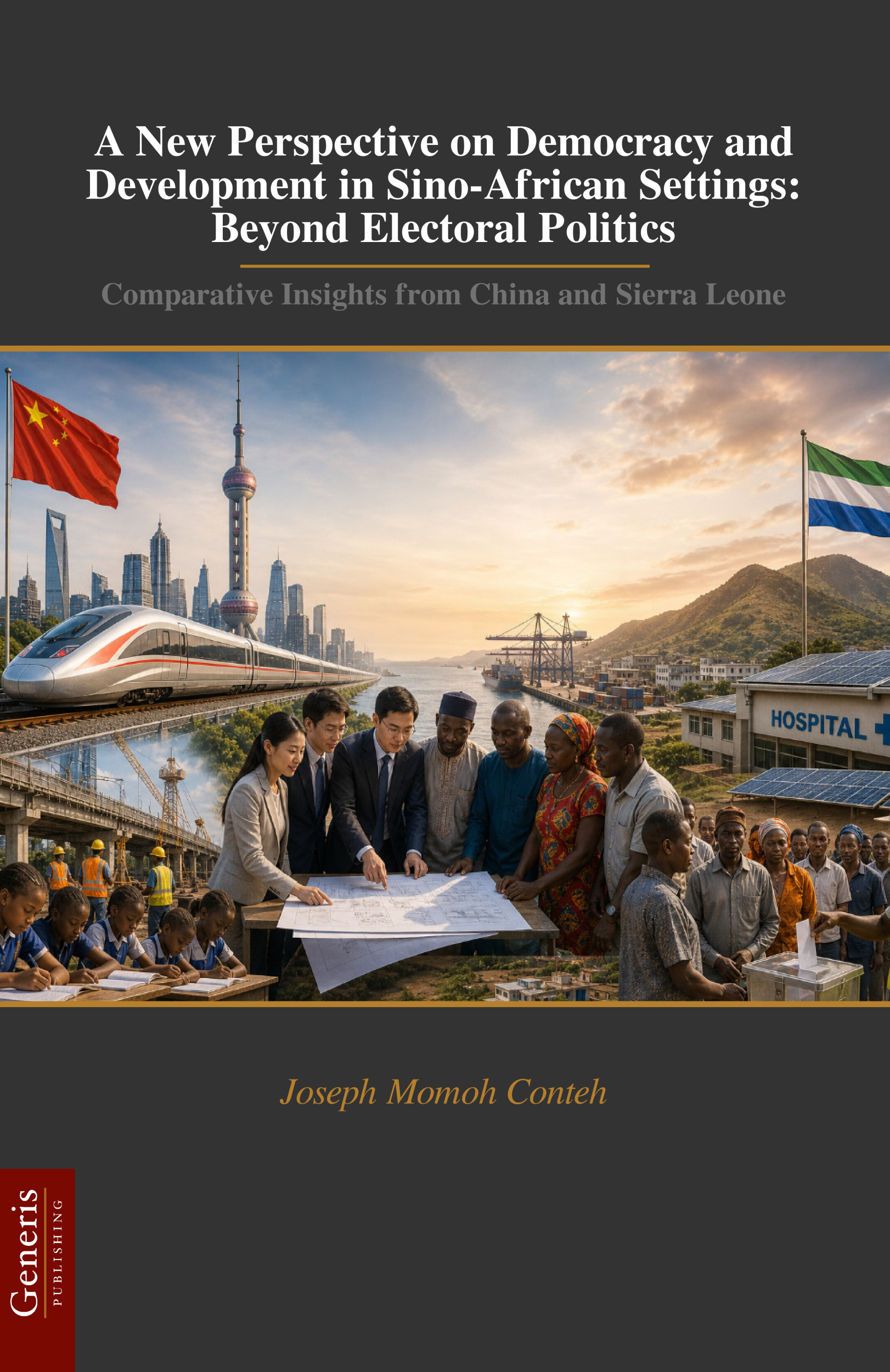
One question drives this book: can a nation develop without competitive elections, and what does the answer mean for Africa? Drawing on my research at Peking University’s Institute of South-South Cooperation and Development, I compare China and Sierra Leone, two states at opposite ends of the governance spectrum. I introduce the legitimacy gap, the space […]
ISBN: 979-8-89966-614-8
€54.99
| ISBN | 979-8-89966-614-8 |
|---|---|
| Author | Joseph Momoh Conteh |
| Publisher | |
| Publication year | |
| Language | |
| Number of pages | 205 |
One question drives this book: can a nation develop without competitive elections, and what does the answer mean for Africa? Drawing on my research at Peking University’s Institute of South-South Cooperation and Development, I compare China and Sierra Leone, two states at opposite ends of the governance spectrum.
I introduce the legitimacy gap, the space between procedural legitimacy won at the ballot box and performance legitimacy won through delivery. China lifted 800 million people out of poverty without multi-party elections. Sierra Leone has held credible elections since 1961 yet sits 148th on the Human Development Index. The gap reflects differences in state capacity, institutional coherence, and political culture.
Across twelve chapters, I examine historical context, sectoral evidence in infrastructure, education, health, and digital governance; and the political economy of reform. I assess Chinese engagement through FOCAC and the Belt and Road Initiative with honest attention to opportunity and risk.
I do not argue Africa should become China. African states must close their legitimacy gap through serious investment in performance, accountability, and capacity.