Additional information
| ISBN | 979-8-89966-694-0 |
|---|---|
| Author | Bukola Victoria James, James Kehinde Adeleke |
| Publisher | |
| Publication year | |
| Language | |
| Number of pages | 68 |

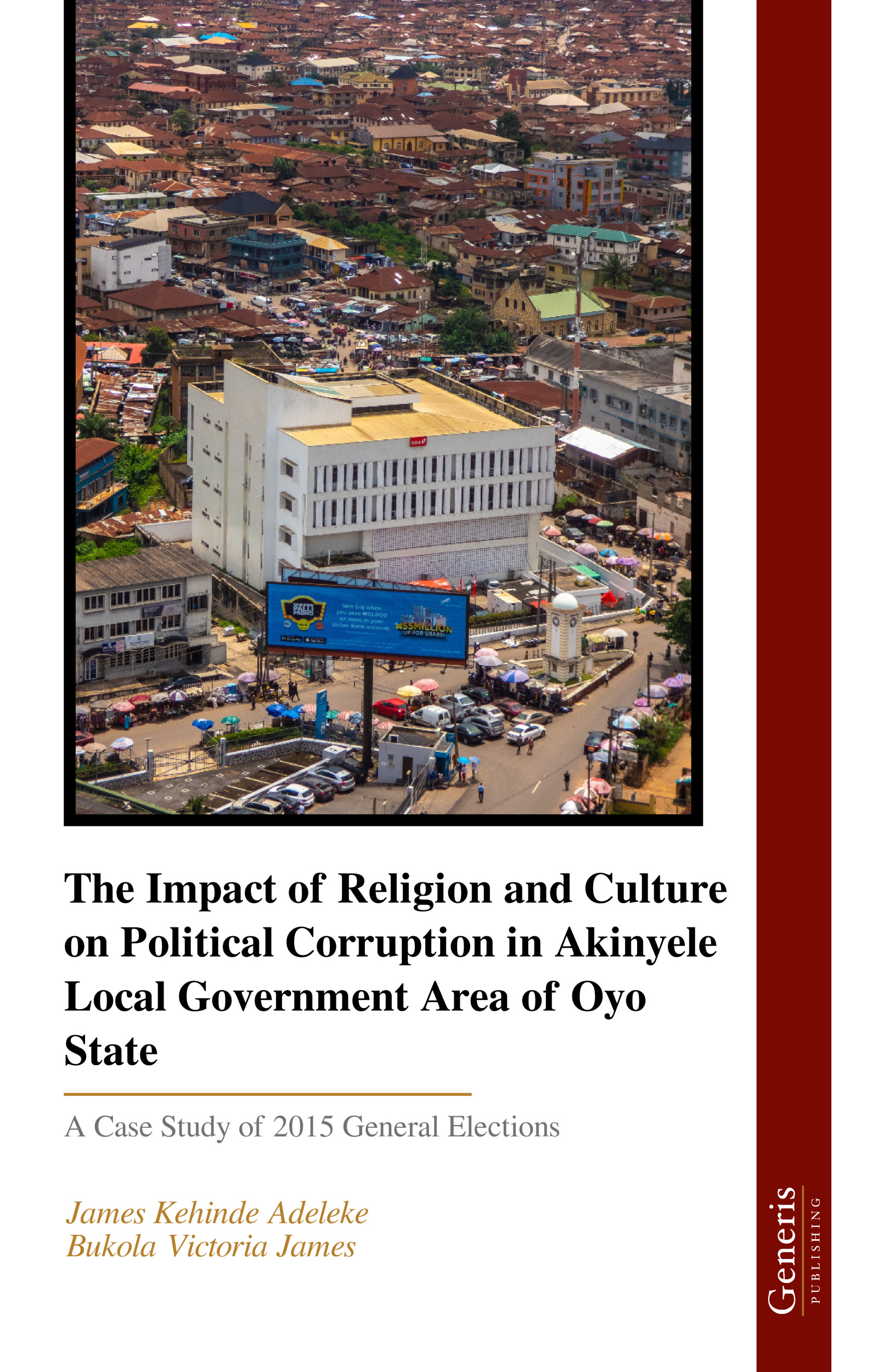
The discourse on political corruption in Nigeria remains a central theme in understanding the country’s developmental trajectory. While systemic factors such as weak institutions and poor governance are frequently cited, the socio-cultural and religious underpinnings of the electorate often remain underexplored. This study, focusing on the Akinyele Local Government Area (LGA) of Oyo State, interrogates […]
ISBN: 979-8-89966-694-0
€27.99
| ISBN | 979-8-89966-694-0 |
|---|---|
| Author | Bukola Victoria James, James Kehinde Adeleke |
| Publisher | |
| Publication year | |
| Language | |
| Number of pages | 68 |
The discourse on political corruption in Nigeria remains a central theme in understanding the country’s developmental trajectory. While systemic factors such as weak institutions and poor governance are frequently cited, the socio-cultural and religious underpinnings of the electorate often remain underexplored. This study, focusing on the Akinyele Local Government Area (LGA) of Oyo State, interrogates the intersection of religious belief, cultural norms, and electoral corruption during the 2015 general elections. The persistence of underdevelopment manifesting as a lack of basic social amenities, health facilities, and reliable power is inextricably linked to a culture of political corruption that thrives when the electorate’s choices are dictated by non-meritocratic factors.
Local government in Nigeria was constitutionally designed to be the tier of government closest to the people, aimed at catalyzing grassroots development. However, in Akinyele LGA, as in many other parts of the country, this potential has been stifled by the “syndrome of corruption.”