Additional information
| ISBN | 979-8-89966-646-9 |
|---|---|
| Author | Joseph M. Conteh |
| Publisher | |
| Publication year | |
| Language | |
| Number of pages | 331 |

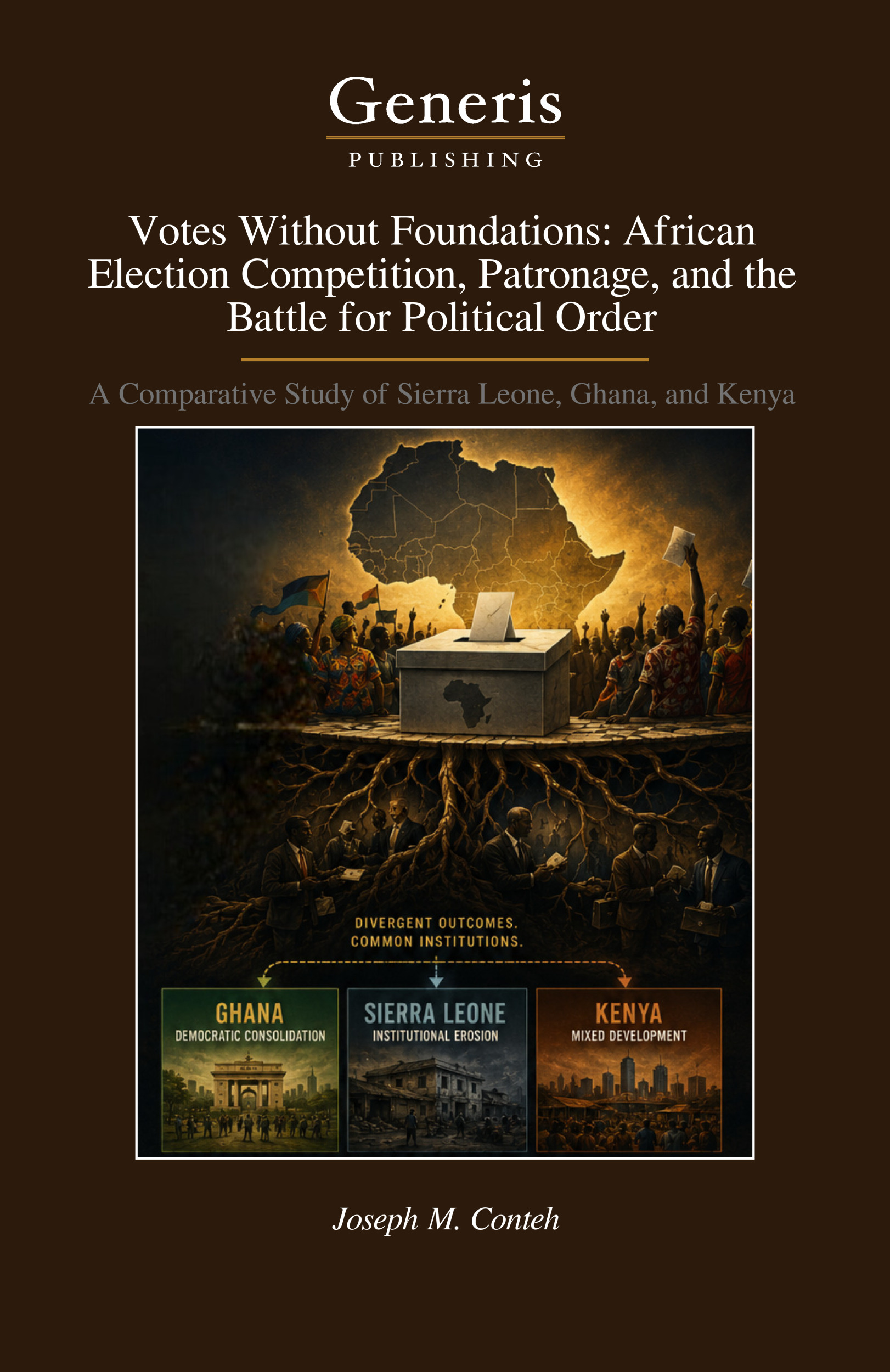
Why do competitive elections consolidate democracy in some African states and corrode it in others? This book confronts that puzzle through a systematic comparison of Sierra Leone, Ghana, and Kenya, three Anglophone countries that share colonial inheritance, presidential constitutions, ethnic pluralism, and post-1990 multiparty commitments, yet have followed strikingly different paths. Ghana has consolidated through […]
ISBN: 979-8-89966-646-9
€74.99
| ISBN | 979-8-89966-646-9 |
|---|---|
| Author | Joseph M. Conteh |
| Publisher | |
| Publication year | |
| Language | |
| Number of pages | 331 |
Why do competitive elections consolidate democracy in some African states and corrode it in others? This book confronts that puzzle through a systematic comparison of Sierra Leone, Ghana, and Kenya, three Anglophone countries that share colonial inheritance, presidential constitutions, ethnic pluralism, and post-1990 multiparty commitments, yet have followed strikingly different paths. Ghana has consolidated through repeated peaceful alternations. Sierra Leone has suffered progressive institutional erosion despite uninterrupted elections. Kenya has achieved partial consolidation alongside persistent ethnicised clientelism.
The book develops a conditional theory built on four mechanisms: bottom-up patronage, cabinet expansion, party institutionalisation, and the gap between de facto power and de jure procedure. Drawing on Afrobarometer surveys, governance indicators, and the Pedersen index of electoral volatility, it shows that elections strengthen or unsettle political order depending on the institutional foundations beneath them. The argument supersedes both third-wave optimism and pessimistic alternatives, with practical implications for reformers and donors alike.