Additional information
| ISBN | 979-8-89966-380-2 |
|---|---|
| Author | Vladimir Shiryaev |
| Publisher | |
| Publication year | |
| Language | |
| Number of pages | 270 |

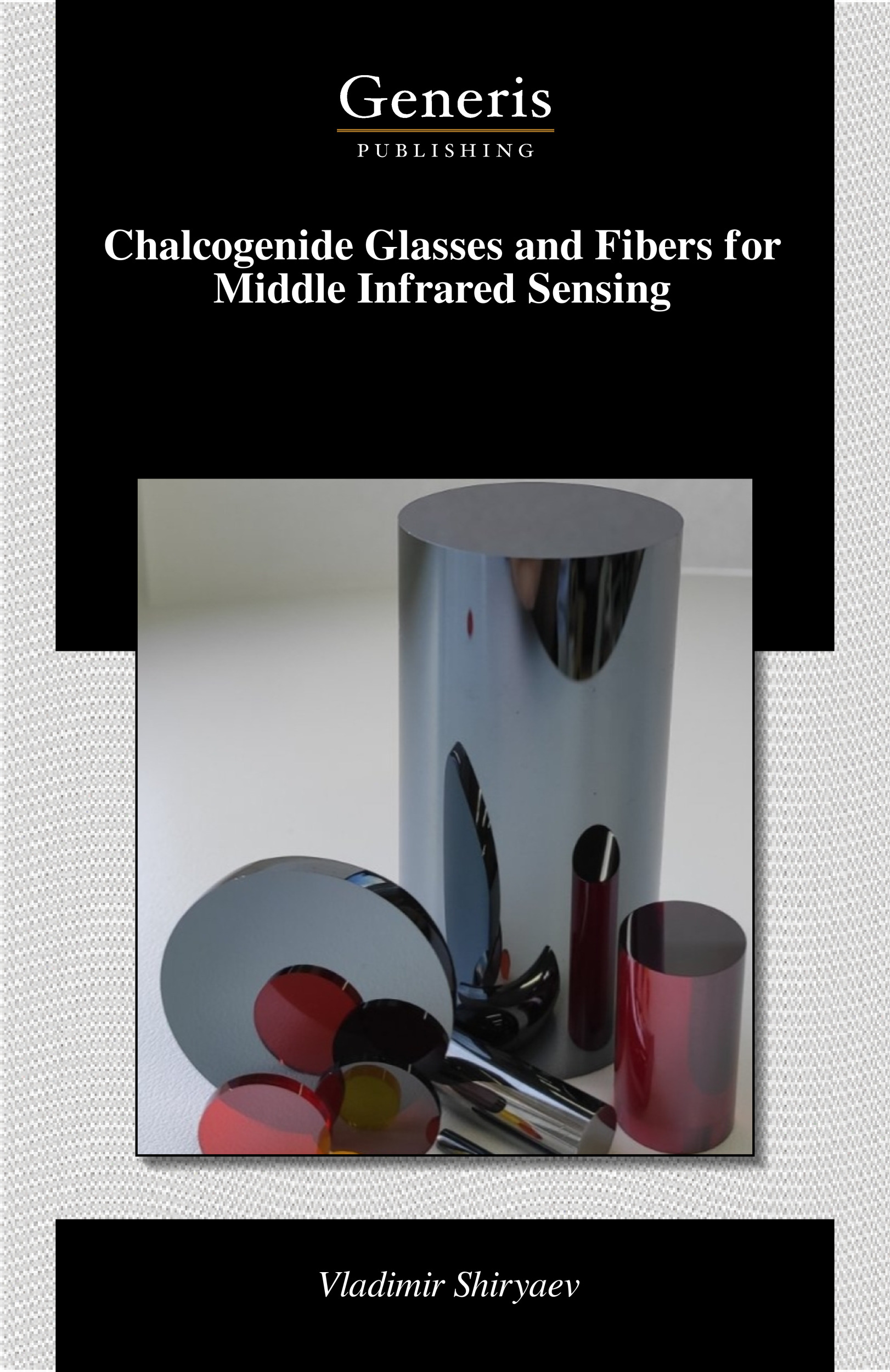
Fiber optic evanescent wave spectroscopy (FEWS) is based on recording the absorption spectrum of a fiber in contact with an analyzed liquid, powder, paste, gas, biological tissue, etc. Due to the partial penetration of radiation beyond the side surface of a fiber, selective absorption bands of analyte components appear in the spectrum. Chalcogenide glasses, compared […]
ISBN: 979-8-89966-380-2
€64.99
| ISBN | 979-8-89966-380-2 |
|---|---|
| Author | Vladimir Shiryaev |
| Publisher | |
| Publication year | |
| Language | |
| Number of pages | 270 |
Fiber optic evanescent wave spectroscopy (FEWS) is based on recording the absorption spectrum of a fiber in contact with an analyzed liquid, powder, paste, gas, biological tissue, etc. Due to the partial penetration of radiation beyond the side surface of a fiber, selective absorption bands of analyte components appear in the spectrum. Chalcogenide glasses, compared to polycrystalline silver halides, have good transmission in the mid-IR, are resistant to aggressive media and have better photo-stability. This monograph book attempts to present a survey of recent progress in development of chalcogenide glasses and fibers for FEWS. Chapter 1 describes chalcogenide glasses for mid-IR FEWS. Chapter 2 gives a theoretical basis of the operation of FEWS sensors of various designs. Chapter 3 reviews the chalcogenide glasses that are promising for FEWS, their preparation methods and properties. Chapter 4 describes the preparation and characteristics of REE-doped chalcogenide glasses and fibers for mid-IR emitters. Chapter 5 reviews the data on the development of mid-IR supercontinuum sources. Chapter 6 describes various schemes of sensors.