Additional information
| ISBN | 979-8-89966-738-1 |
|---|---|
| Author | Sola Oluwagbenle |
| Publisher | |
| Publication year | |
| Language | |
| Number of pages | 56 |

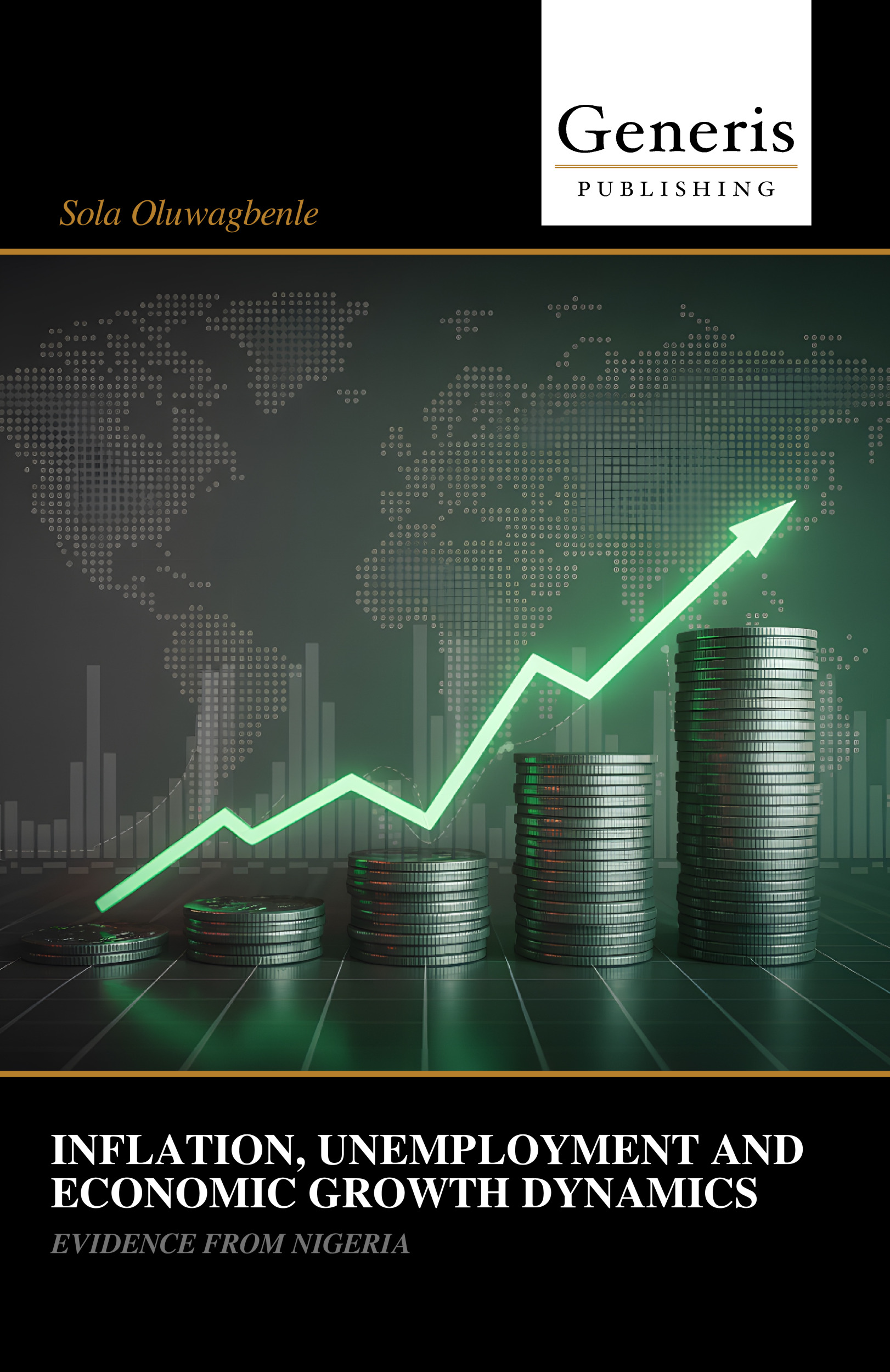
The book examines the dynamic relationship among inflation, unemployment and economic growth in Nigeria, using annual data covering 1986–2024. It investigates the extent to which inflation and unemployment influence economic performance while accounting for exchange rate and trade openness. The study is anchored on major macroeconomic theories, particularly the Phillips Curve and Okun’s Law and […]
ISBN: 979-8-89966-738-1
€29.99
| ISBN | 979-8-89966-738-1 |
|---|---|
| Author | Sola Oluwagbenle |
| Publisher | |
| Publication year | |
| Language | |
| Number of pages | 56 |
The book examines the dynamic relationship among inflation, unemployment and economic growth in Nigeria, using annual data covering 1986–2024. It investigates the extent to which inflation and unemployment influence economic performance while accounting for exchange rate and trade openness. The study is anchored on major macroeconomic theories, particularly the Phillips Curve and Okun’s Law and employs the Autoregressive Distributed Lag (ARDL) approach to establish short- and long-run relationships. The findings confirm a significant long-run relationship among the variables. Economic growth significantly reduces unemployment, supporting Okun’s Law, while inflation has no significant effect on unemployment, indicating that the traditional Phillips Curve trade-off is not sustained in Nigeria. Exchange rate significantly affects unemployment, whereas trade openness has an insignificant effect. Granger causality reveals unidirectional causality involving exchange rate, unemployment and economic growth while inflation and unemployment exhibit bidirectional causality. The study concludes that persistent inflation, unemployment and structural weaknesses constrain sustainable development.