Additional information
| ISBN | 979-8-89966-761-9 |
|---|---|
| Author | Vimbi Petrus Mahlangu |
| Publisher | |
| Publication year | |
| Language | |
| Number of pages | 426 |

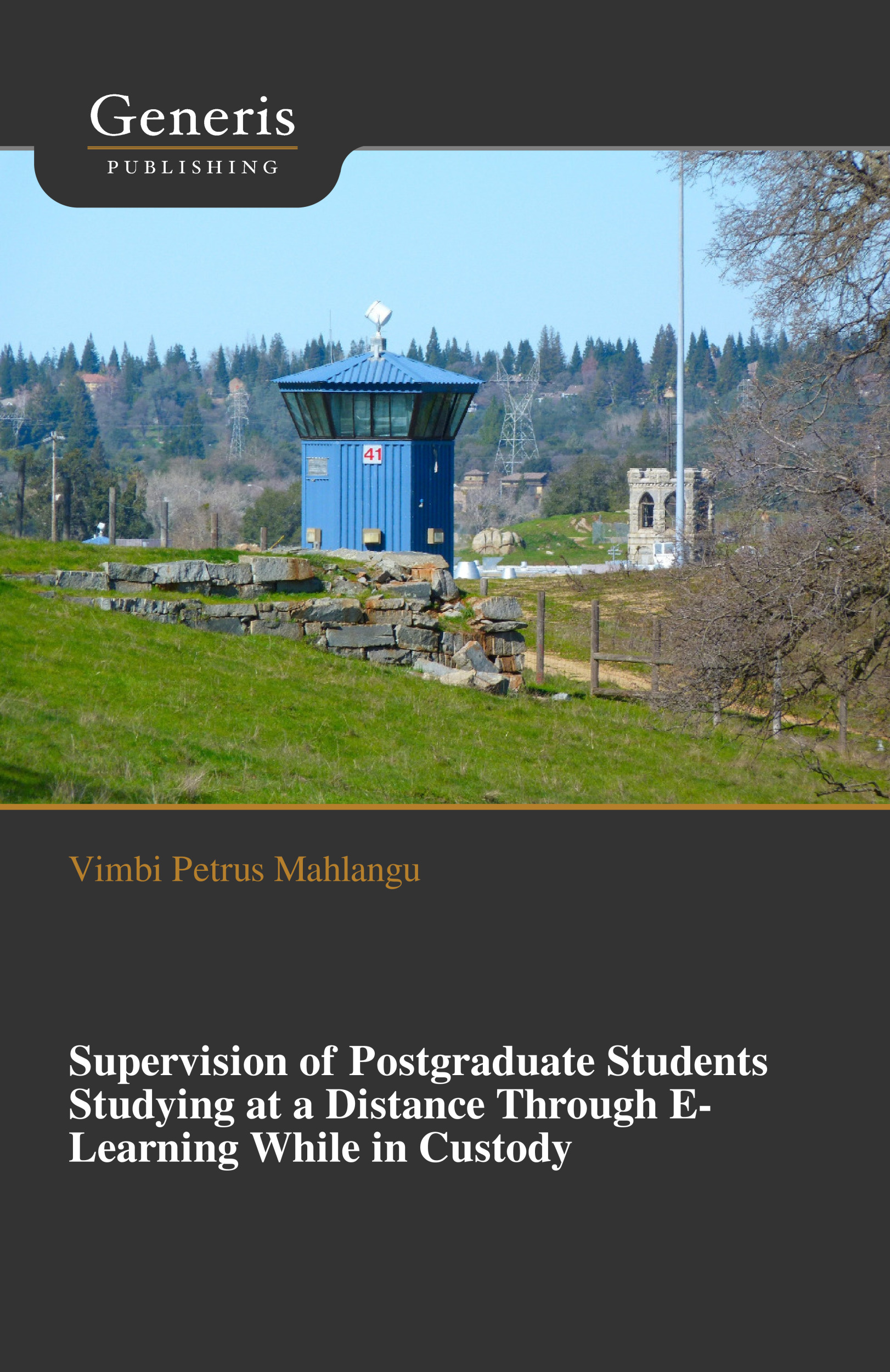
This book provides a comprehensive examination of postgraduate education within custodial settings, focusing on the barriers, support systems, supervisory practices, and institutional conditions that shape the educational experiences of incarcerated students. It argues that while prisons are environments marked by restriction, surveillance, and inequality, meaningful postgraduate education remains possible when supported by effective supervision, inclusive […]
ISBN: 979-8-89966-761-9
€64.99
| ISBN | 979-8-89966-761-9 |
|---|---|
| Author | Vimbi Petrus Mahlangu |
| Publisher | |
| Publication year | |
| Language | |
| Number of pages | 426 |
This book provides a comprehensive examination of postgraduate education within custodial settings, focusing on the barriers, support systems, supervisory practices, and institutional conditions that shape the educational experiences of incarcerated students. It argues that while prisons are environments marked by restriction, surveillance, and inequality, meaningful postgraduate education remains possible when supported by effective supervision, inclusive institutional frameworks, and equitable educational policies. It begins by analysing the environmental and physical barriers that incarcerated postgraduate students encounter. Prison environments are often overcrowded, noisy, and lacking in private study spaces, making concentration and sustained academic engagement difficult. Educational facilities within correctional institutions are frequently inadequate, with limited access to desks, libraries, research materials, and quiet learning environments. These conditions undermine the continuity and quality of postgraduate study, especially for research-intensive programmes requiring extended reading, writing, and critical reflection.