Additional information
| ISBN | 979-8-89966-804-3 |
|---|---|
| Author | Ahmed Nabil Elalem |
| Publisher | |
| Publication year | |
| Language | |
| Number of pages | 268 |

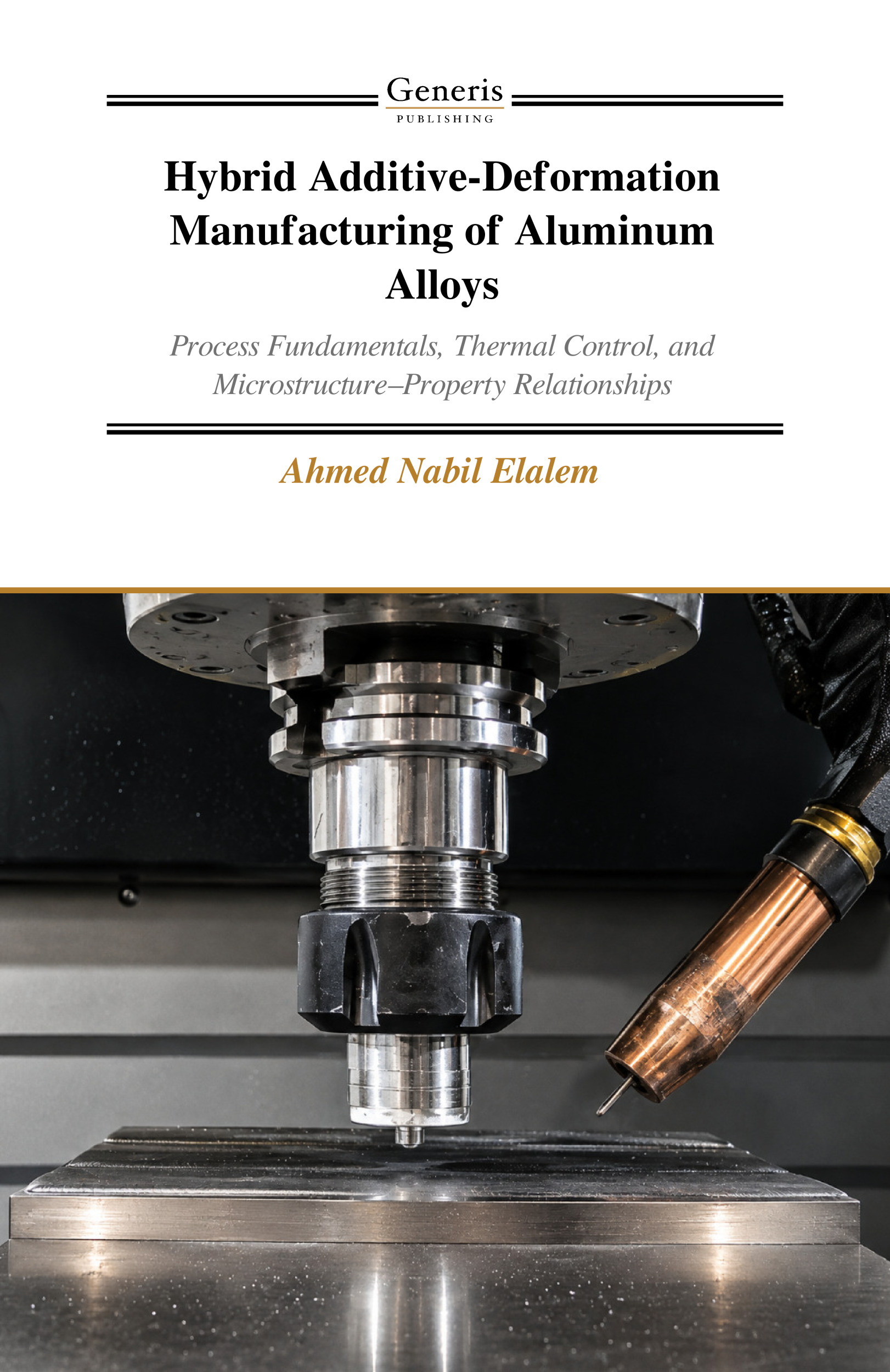
Fusion-based metal additive manufacturing has solved the shaping problem and left a metallurgical one. Parts inherit the coarse columnar structure that solidification produces, and no thermal post-treatment can refine it, because recrystallization requires stored deformation energy a deposit does not possess. This book examines the direct response: imposing plastic deformation on each layer as the […]
ISBN: 979-8-89966-804-3
€64.99
| ISBN | 979-8-89966-804-3 |
|---|---|
| Author | Ahmed Nabil Elalem |
| Publisher | |
| Publication year | |
| Language | |
| Number of pages | 268 |
Fusion-based metal additive manufacturing has solved the shaping problem and left a metallurgical one. Parts inherit the coarse columnar structure that solidification produces, and no thermal post-treatment can refine it, because recrystallization requires stored deformation energy a deposit does not possess.
This book examines the direct response: imposing plastic deformation on each layer as the part is built. It develops a unified additive-deformation architecture, protected by a granted United States patent, and characterizes an aluminum system built by wire arc deposition with interlayer friction stir processing on one CNC platform.
The findings are quantitative. Mean grain area falls by 29 to 48 times, hardness rises 45.8 percent, and grain size scatter falls by 55 to 71 percent. Grain refinement is shown to supply only about 29 percent of the hardness gain, with fragmented eutectic silicon and retained dislocations supplying the rest.
Every claim is graded by the strength of its evidence, and inconsistencies in the published record are reconciled rather than smoothed over.
For graduate students, industrial researchers, and R&D engineers in metal additive manufacturing.


