Additional information
| ISBN | 979-8-89966-676-6 |
|---|---|
| Author | Fahad Hameed Khan |
| Publisher | |
| Publication year | |
| Language | |
| Number of pages | 209 |

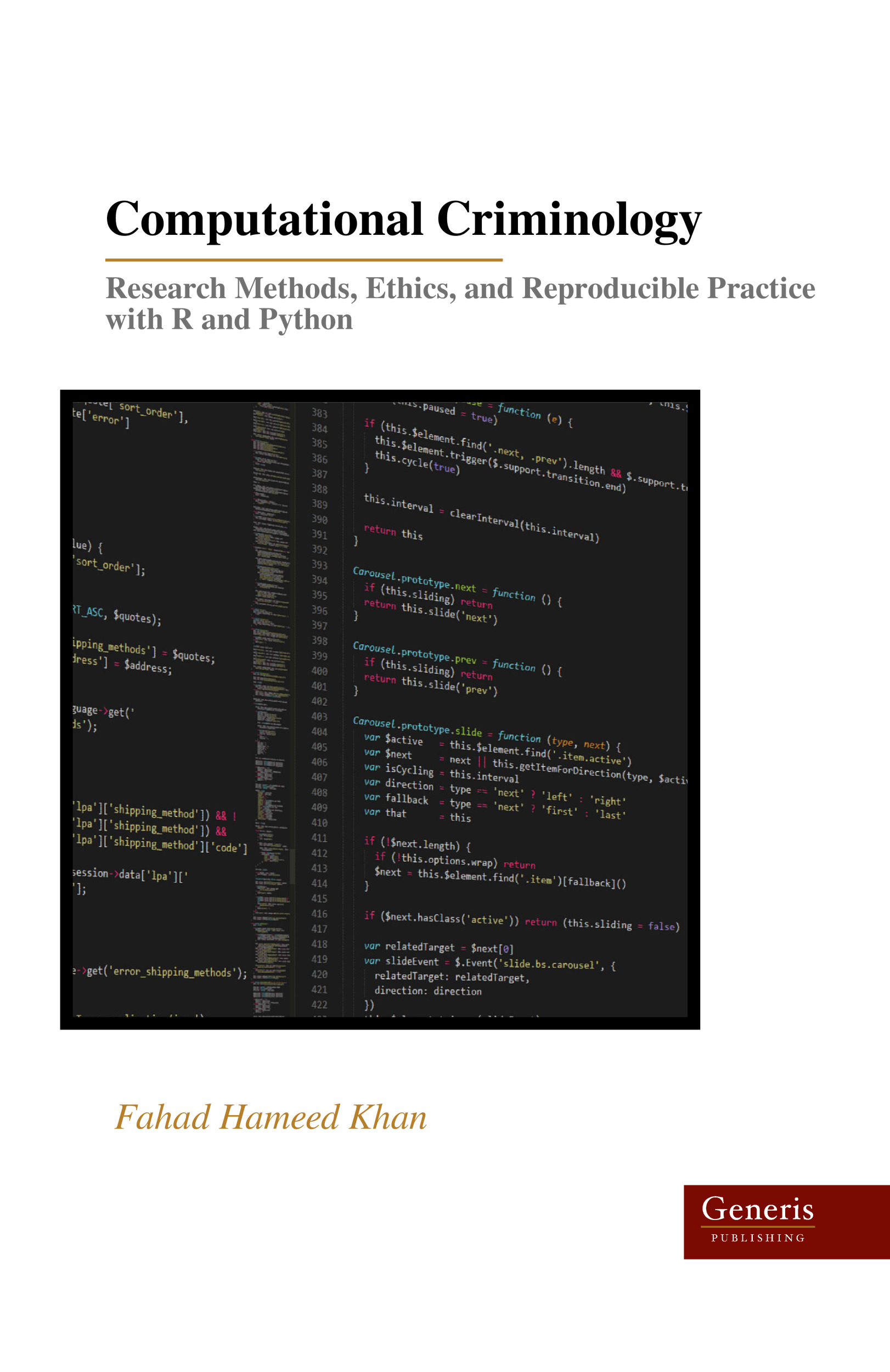
Computational methods have changed how researchers study crime, yet the tools often arrive without the judgement needed to use them well. This handbook closes that gap. It guides postgraduate students and researchers through the methods that now shape criminological inquiry, from statistical foundations and machine learning to spatial analysis, network analysis, agent-based modelling, text as […]
ISBN: 979-8-89966-676-6
€54.99
| ISBN | 979-8-89966-676-6 |
|---|---|
| Author | Fahad Hameed Khan |
| Publisher | |
| Publication year | |
| Language | |
| Number of pages | 209 |
Computational methods have changed how researchers study crime, yet the tools often arrive without the judgement needed to use them well. This handbook closes that gap. It guides postgraduate students and researchers through the methods that now shape criminological inquiry, from statistical foundations and machine learning to spatial analysis, network analysis, agent-based modelling, text as data, and causal inference.
Each chapter pairs clear explanation with worked examples in R and Python, written for readers who have never programmed. The aim is not only technical fluency but critical understanding. A central argument runs throughout: recorded crime data measures institutional response, not crime itself, and prediction is never the same as causation.
Readers learn to apply each method, read its results with care, and recognise its limits. Practical and rigorous in equal measure, this is a textbook for anyone who wants to study crime with computational tools and a clear head.